Unclaimed Money sits idle in Greenville County until a resident discovers it through a quick unclaimed funds search. The county’s unclaimed property database, accessed via the official online portal, lists dormant accounts, uncashed checks, and unclaimed tax refunds. Residents can start the missing money claim form at 301 University Ridge, Suite S-1100, Greenville, SC 29601 or call (864) 467-7050 during office hours. Early verification prevents fraud and speeds the unclaimed cash recovery process.
Our team guides you through how to claim abandoned money, from gathering ownership proof to completing the unclaimed money claim paperwork. We explain unclaimed retirement account claims, unclaimed bank account recovery, and unclaimed utility deposits, while highlighting unclaimed money eligibility criteria and claim fees. A simple unclaimed assets lookup reveals unclaimed estate assets or unclaimed wages claim, and our experts provide claim tips, status checks, and fraud prevention advice.
How to Search Unclaimed Money
An unclaimed funds search can connect a Greenville County resident with money that a bank, employer, insurer, utility, or government agency could not return. Start with Greenville County’s Tax Collector page, then use its official link to South Carolina’s statewide unclaimed-property records. You can also explore greenville county sc to access countywide public services. A match starts a claim review; it does not establish ownership by itself. Check the owner name, property type, last-contact date, and claim status before sending personal records.
Official Search Portal: https://greenvillecountysc.gov/TaxCollector/
Steps to Search
- Visit the Greenville County Tax Collector website and look for the unclaimed property link or the South Carolina Office of the State Treasurer.
- Confirm that the search page belongs to an official South Carolina government agency.
- Enter your legal name and repeat the search using former surnames, middle names, initials, or spelling variations.
- Add previous addresses if the search form allows them.
- Use property-type filters carefully, as narrow filters may hide valid results.
- Compare matches using the owner name, amount, institution, address, and property type.
- Record the property ID, reported holder, amount, and claim status.
- Follow the official claim instructions or contact the agency if you need clarification. Submit identity documents only through the verified government process.
Types of Unclaimed Money
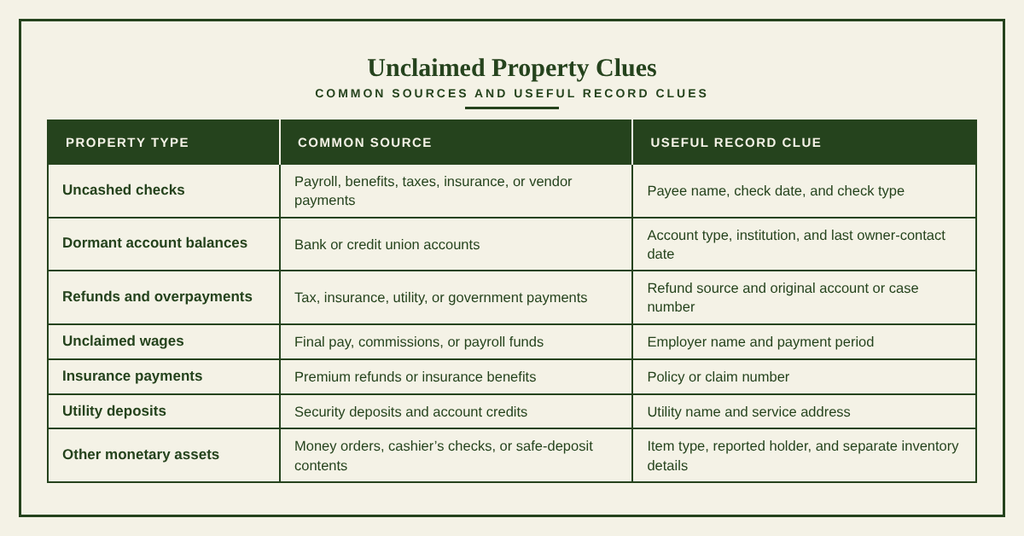
South Carolina unclaimed property includes money from several sources, and each category follows a different reporting path. The table below identifies common property types and useful record clues before the detailed sections explain how owners can prove a claim.
Uncashed Checks
A returned or never-issued check can include payroll, benefit, tax, insurance, vendor, cashier’s, or certified-check funds. The search result may name the payee and issuer but omit the original check number. Follow the listed claim method because the state may issue a new payment instead of returning the original paper check.
Dormant Account Balances
Checking, savings, and other bank balances may reach the state after a long period without owner activity. A record can show the financial institution, account type, and last owner-contact date. Once funds leave the bank for state custody, federal deposit insurance at the original bank no longer applies.
Refunds and Overpayments
A refund can come from a tax agency, insurer, contractor, landlord, or utility. Federal income-tax refunds normally follow Internal Revenue Service procedures rather than a generic unclaimed-property claim. A federal refund generally must be claimed within three years of the original return deadline, so use the tax agency named on the notice.
Unclaimed Wages
Final paychecks, commissions, and other earned wages may be reported after an employer cannot contact the worker. An employer’s name and payment period often appear in the record. Old payroll stubs, payment ledgers, and tax forms can help establish the amount earned and the person entitled to receive it.
Insurance Payments
Insurance property may include premium refunds, benefits, or payments due under a policy. The record often includes the insurer and a policy or claim number. A denied insurance claim is not the same as unclaimed property, so verify that the search result refers to money already paid to the named owner.
Utility Deposits
Utility companies can hold security deposits, final account credits, refunds, and overpayments that never reach the customer. The record may use a service address rather than a mailing address. A utility deposit claim usually requires proof that the deposit was paid and that the account belonged to the claimant.
Other Monetary Assets
Cash, money orders, cashier’s checks, traveler’s checks, and other property can appear under separate categories. Safe-deposit boxes may contain cash, documents, or securities, and each item type can follow a different claim process. Certain retirement accounts also require the plan administrator or federal regulator named in the record.
How Money Becomes Unclaimed
Unclaimed money usually passes through several events before state custody. The waiting period, notice effort, and transfer method depend on the property type under South Carolina law.
Dormancy Period
South Carolina sets different inactivity periods for wages, checks, bank accounts, insurance, utility money, and other property. The clock may begin with maturity, the last owner activity, or the close of a related claim period. There is no single waiting period that applies to every asset, so check the date and property type on the official record.
No Owner Contact
The holder of the money may send notices to the last known address or use other contact methods listed in the account record. Failed mail or electronic contact does not always stop the process. Once the required notice period passes, the holder can report the property as unclaimed.
Returned Payments
A payment may be returned because the address was wrong, the account was closed, or the check lacked enough funds. Electronic payments can fail for similar reasons, including a closed account or invalid banking details. Each failed attempt may affect the date used to calculate how long the money has remained unclaimed.
Inactive Accounts
An account can still hold money while showing little or no customer activity. Banks may count transactions, statements, withdrawals, and account contacts separately when applying the inactivity rules. A dormant account can remain with the bank for a time before its balance and owner details move to the state.
Transfer to the State
After the required reporting period and notice steps, the financial institution or other holder sends eligible property to the South Carolina Office of the State Treasurer. The state keeps the money and owner records until a valid claim is filed. This transfer does not mean the money was lost; it changes who holds and protects it.
Finding Money Belonging to You
A complete search compares the database record with documents created before the money became dormant. Review these fields before filing:
Matching Your Name
Search the name in the legal form used when the money was earned or deposited. Current nicknames, online usernames, and shortened names may not match the record. A name match remains only one part of the claim, since two people can share the same first and last name.
Reviewing Previous Addresses
Old addresses often carry more value than a current address because the property was tied to the older customer record. Compare addresses on lease papers, bank statements, utility bills, and tax records. If the form lacks an address field, use the address as a verification point after matching the name.
Checking the Property Type
Confirm that the listed category matches the source of the money. A dormant bank account and a returned payroll check can carry similar names but require different proof. Filing one claim form for several unrelated records can create delays, so handle each property ID as a separate claim unless the agency states otherwise.
Comparing the Reported Holder
Read the reported holder exactly as shown, including middle names, suffixes, and business names. The name may reflect the person who held the account rather than the current legal owner. For example, a former spouse, parent, or business entity may appear in the record before inheritance or transfer.
Confirming Ownership
Use records created while you held the account or received the payment. Current pay stubs or a new bank statement may not prove that you owned an older dormant balance. Records predating the last owner-contact date usually create a clearer link between the claimant and the reported property.
Claiming Unclaimed Money
A valid unclaimed money claim links a person to a specific state-held property record. Eligibility depends on legal ownership, a timely filing, and enough proof to satisfy the state’s review.
Starting a Claim
Start with the official claim form linked from the record and note any filing deadline printed on the notice. Some property categories have shorter periods than others, so delay can affect a claim. Seniors may ask a trusted family member to read the form, but the owner or authorized representative must sign the application.
Claimant Identification
Provide the claimant’s full legal name, date of birth, current address, telephone number, and email address. The agency may request a government identification document and a taxpayer identification number. Send sensitive numbers only through the official form or a verified agency channel.
Ownership Proof
Bank statements, voided checks, payroll records, lease agreements, utility bills, tax returns, and insurance papers can support ownership. Select documents that match the reported holder, property type, and address. A clear copy of an old statement often carries more weight than a new letter that repeats the claimant’s name.
Supporting Documents
Prepare these items before sending an application:
- Current government identification
- Old bank or credit union statements showing the owner name and address
- Voided checks or debit-card statements tied to the reported account
- Pay stubs, tax forms, or employer records for wages
- Policy, premium, or claim records for insurance money
- Lease, invoice, or utility account records for deposits and refunds
- Marriage, divorce, or court records that explain a name change
- Death, probate, or heir records when the reported owner is deceased
Claim Submission
Complete every field, sign where required, and obtain notarization if the form requests it. Send copies rather than originals unless the official notice asks for an original. The official unclaimed-property search and claim process does not require a payment to a stranger for access to a claim.
Claim Status Tracking
Save the claim confirmation, submission date, property ID, and reference number. The official status page or claim office can then identify the application without requiring a duplicate filing. If the agency sends a request for more evidence, answer through the same case reference and keep copies of everything sent.
Unclaimed Money Claim Verification
Verification separates three questions: who is applying, where the claimant lived, and whether the claimant owned the reported property. Each question may require a different record.
Identity Verification
The agency compares the application with a current identification document and the name on the claim. A mismatch involving a middle name, birth date, or address can slow review. Use the agency’s correction process rather than sending a new form with changed details.
Address Verification
Current and former addresses help link the claimant to the owner record. The review may require a dated bill, account statement, lease, or mail record. You can also access county auditor to review official records. If several people shared one address, address proof alone may not settle ownership, so the agency may request account-specific records.
Ownership Verification
The agency checks whether the applicant had control of the money before it became unclaimed. Account statements, canceled checks, payroll records, and policy papers may carry more weight than a current affidavit. The claimed amount should also match the amount and property type listed in the state record.
Name Change Documentation
A former surname, married surname, or legal name change can create a mismatch. Marriage certificates, divorce decrees, court orders, and official name-change records may resolve it. The agency may request certified copies or compare the old and new names with the reported holder record.
Additional Evidence Requirements
Some claims require a notarized affidavit, certified death certificate, probate order, or other legal record. Follow the agency’s written request closely because each document must serve a stated purpose. Privacy can be protected by sending only the pages requested and using the agency’s stated delivery method.
Unclaimed Money Claim Processing
After submission, the claim moves through a review sequence. The property stays under state control until the review and any required payment steps are complete.
Claim Review
An intake reviewer checks for the required form, claimant details, property ID, and signature. A complete application receives a reference number used during later reviews. Missing basic items can lead to a returned application or a request for corrected pages.
Document Review
A claims examiner compares the submitted documents with the state record. Names, dates, amounts, and addresses must form a consistent history. Examiners may ask for clearer copies when a page is cut off, too faint to read, or missing a date.
Requests for Additional Information
The agency may request a missing document, a better ownership record, or proof of a name change. Respond by the date stated in the request and reference the original claim number. Repeated calls with new paperwork can create duplicate files, so keep one organized case record.
Approved Claims
An approval notice should state the approved property, amount, approved claimant, and payment status. Review the figures against the claim before cashing any payment. Ask the agency to explain any difference between the listed amount and the payment total.
Rejected Claims
A rejection notice should state the reason and explain whether corrected evidence, a new application, or an appeal is available. Common causes include an ownership mismatch, an unsigned form, or filing after the applicable deadline. Follow the stated remedy and its deadline rather than refiling without changes.
Payment of Approved Claims
Payment may arrive by check or electronic transfer, depending on the approved claim. Confirm that the payment names the approved claimant and report an incorrect payee to the issuing agency. Some payments include interest or other earnings and may carry tax reporting rules, so review the payment and tax notices before filing.
A bankruptcy filing can change who controls property owned by the debtor, and a bankruptcy trustee may need to resolve the claim before payment. A recipient who receives an heir’s property may also face a tax based on legal entitlement. The state’s final notice and advice from a qualified tax professional can clarify these outcomes.
Unclaimed Money for Deceased Owners
Money reported under a deceased person’s name can require probate records rather than a routine owner claim. The search must begin with the deceased owner’s legal name, followed by proof of the claimant’s legal relationship or authority.
Finding Money Under a Deceased Person’s Name
Search the full legal name, including middle names and former surnames, and compare old addresses with probate or financial records. Do not add “deceased” to the name field unless the search form requests it. A business, trust, or estate may appear as the reported holder instead of the individual.
Heir Claims
An heir’s claim depends on the will, inheritance law, beneficiary records, and the state’s rules for deceased owners. Some heirs may need probate proceedings before the state can pay them. The death certificate alone does not transfer legal authority to collect a claim.
Estate Claims
A personal representative may file through the estate opened in probate court. The court’s appointment documents must show authority to act for the estate. Estate claims can also require a court-approved inventory that lists the unclaimed property and its reported value.
Executor Claims
An executor can claim only within the authority granted by the probate court. The executor should use the estate’s legal name and reference the case number on required forms. Assets held in a trust may belong to the trustee rather than the estate, so trust documents can control the payment path.
Required Estate Documents
Common documents include a certified death certificate, letters of administration or letters testamentary, a probate order, and proof of family relationship. The agency may request an estate inventory, inheritance schedule, or certified trust records. Send only the documents listed for the particular claim.
Unclaimed Money Record Changes
Search results can change as institutions report new property, correct owner details, or close claims. A changed result does not always mean that money vanished.
Newly Reported Money
Financial institutions report property on set cycles, so a recent payment may not appear right away. A record can also enter the search system after a reporting or data review. Repeating the search after a reporting cycle can reveal property that was absent earlier.
Updated Property Information
Names, addresses, amounts, and contact details can be corrected as the agency receives better records. An updated owner name may reflect a merger, clerical error, or name change. Compare the new record with earlier notes before filing another application.
Claimed Money
A claimed property may disappear from the live search because payment is being prepared or has been sent. The claimant can check the case status with the property ID or reference number. A record marked claimed does not mean the money was paid to an unrelated person.
Removed Records
A record may be removed after correction, merger with another record, or a finding that the item is not state-held property. Removal can also follow a completed claim. Ask the agency for the closed-record reference if the history of a claim matters.
Archived Records
Closed claims and older property records may move out of the main search display. Archiving helps the agency keep current records manageable, but the claim history still exists. Provide the old property ID and dates when asking the claim office to locate an archived file.
Search Problems
Most search problems involve a name mismatch, incomplete proof, a record that has not reached the state, or a claim already in progress. Work through one issue at a time and keep the official property ID near every document.
No Matching Name
Try legal names, former names, middle names, initials, and spelling variants in separate searches. Old addresses can also reveal a match that the name search missed. If no result appears, the property may not yet be reported, may sit under a business name, or may have been paid directly to another party.
Multiple Matching Owners
Several results can occur when family members share a name or a business has a common owner name. Compare the property type, amount, address, institution, and property ID before filing. Do not submit claims for unrelated people, because ownership proof must fit each separate record.
Missing Property Record
A missing record does not always mean the money was lost. It may remain with the original holder, sit in another state’s system, or be listed under a business or estate name. Check the reported payment source and wait through one reporting cycle before requesting a record trace.
Insufficient Ownership Evidence
Identity documents prove who is applying, but ownership records prove why that person can collect the money. Add older statements, canceled checks, payroll records, leases, or policy papers that match the reported holder and address. If the name changed, include the record that links both names.
Claim Documentation Problems
Common problems include an unsigned form, a missing attachment, an unreadable copy, an outdated address, or a document that does not match the property type. Compare each page with the agency checklist before mailing it. A complete package reduces the number of review cycles.
Claim Already Submitted
Check the original claim reference before filing again. A duplicate application can create conflicting case records and delay review. If the first application was rejected, read the notice for the permitted correction or appeal route and use that reference when responding.
Contact Information
Use the Greenville County Tax Collector office for questions about the county portal or local tax-related records. Claims involving property held by South Carolina should follow the contact instructions published by the Office of the State Treasurer.
Frequently Asked Questions
Find clear answers about locating and claiming unclaimed money in Greenville, South Carolina.
How to start an unclaimed money search in Greenville?
Begin at the Greenville County Tax Collector website. Use the link to South Carolina’s statewide unclaimed‑property database. Enter your name or business name exactly as it appears on any old records. Review matches for owner name, property type, and last‑contact date. If a record looks like yours, note the claim reference number and gather supporting documents. Then follow the online instructions to submit a claim or call (864) 467‑7050 for assistance during office hours.
Where is the official unclaimed property database for SC?
The state maintains its records at the South Carolina State Treasurer’s portal. From the Greenville Tax Collector page, click the “unclaimed property” link to reach the official site. The database lists funds held by banks, insurers, utilities, and government agencies. It is free to search and updates weekly. You can filter results by name, address, or former employer to locate potential assets.
What documents are needed to claim abandoned money?
Typical paperwork includes a government‑issued ID, proof of address, and a completed claim form. If the money relates to a bank account, bring a recent statement or account closure notice. For wages or retirement benefits, provide a W‑2, 1099‑R, or plan statements. If you claim an inheritance, include a copy of the will or probate documents. The Tax Collector office can confirm any extra items before you submit.
How long do I have to file an unclaimed money claim?
South Carolina does not set a strict deadline for most unclaimed assets. However, some types, such as unclaimed tax refunds, may expire after ten years. It is best to file as soon as you locate a match. Delays can lead to additional verification steps or the need to re‑establish ownership. Contact the Greenville office for specific time limits on particular asset categories.
How to check claim status online for Greenville funds?
Log in to the Greenville County Tax Collector’s online portal using the claim reference number you received. The dashboard shows current status, any missing documents, and next steps. If the portal indicates “under review,” expect a response within 30 days. For questions, call the office at (864) 467‑7050 during normal business hours. Keeping your contact information up‑to‑date helps prevent delays.